
Bathsheba, Beyoncé, and the Battles Everyone is Fighting

Those who are kind reward themselves, but the cruel do themselves harm. -Proverbs 11:17
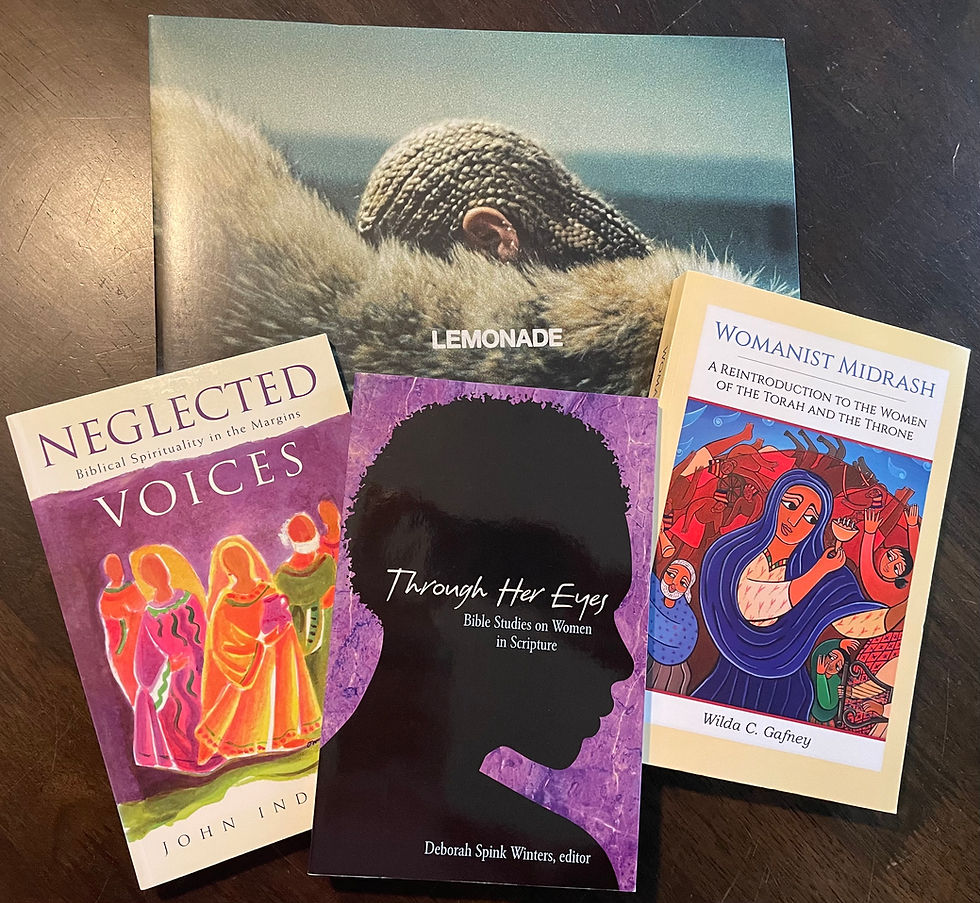
Bathsheba has a story bigger than the Bible contains. Revisiting the story in last night’s Bible study, where David commits adultery by having sex with Bathsheba, the wife of Uriah, a member of David’s own military, we were troubled not only by how Bathsheba is objectified by a man in power and forced to accommodate his carnal desires, robbed of agency, but also by how she is robbed of her voice. So, in today’s Midweek Message devotional, let us use our biblical imagination to peer into Bathsheba’s experience and find how that experience can inform and guide our faith.
The story goes that after King David sees Bathsheba bathing, sends for her, and has sex with her—surely without her consent—she informs David that she is pregnant. To cover the tracks of his transgression, David sends Bathsheba’s husband Uriah out to front lines of battle to have him killed so that David can then take Bathsheba as his wife.
The text says that “when the wife of Uriah heard that her husband was dead, she made lamentation for him. When the mourning was over, David sent and brought her to his house, and she became his wife, and bore him a son” (2 Samuel 11:26-27). We do not know much about Uriah, but he sounds like a good man. I imagine Bathsheba’s lamentation for him was deeply painful. Scripture says that her mourning came to an end, yes, but only as a matter of ritual. Surely, Bathsheba kept mourning the loss of her beloved partner long after David brings her to his house, makes her his wife, and claims the child she bears. She was married to the king and the world kept spinning, but I imagine Bathsheba was fighting a hard battle inside.
There is a quote I turn to often: Be kind, everyone you meet is fighting a hard battle. It has been attributed to Plato and Socrates, but I first heard it in a sermon mentioned as a Buddhist staying. Regardless, today I hear Bathsheba saying it through the voice that Scripture denies her: “Be kind, everyone you meet is fighting a hard battle. I can attest to that.”
Bathsheba’s testimony makes me think of a man I know in his early 80s who lost his wife to cancer two years ago and recently started dating a woman he met in the choir at his church. He speaks happily about their relationship, but his thoughts always return to his wife. “I mourn her every day,” he says. I can only imagine what fighting that inner-battle feels like for him, wrestling with lamentation under the surface of his happy demeanor all the time. What I can say for sure is that in these tender days, he needs kindness. We all do.
Bathsheba needed kindness. She needed to be honored, not objectified. She needed to be respected, not covered up. And across the ages of biblical interpretation, she has needed to be heard and revered, not dismissed and branded a temptress.
Reading the story of David and Bathsheba again, and centering Bathsheba in the story, I am wondering what might happen if we were to recognize the battle she was fighting and be kind to her and to her voice and to her experience and to the stories we continue to tell about her. How might that affect our treatment of one another? If we were to listen to and learn from one another, to value and honor one another, how might that shape the way we treat one another, especially, in this case, the way we treat women whose voices are dismissed?
If we approached one another with kindness—the type of kindness Jesus led with in his relations with everyone fighting hard battles inside—we might just save the world. If we were to see and engage each other with the kindness that Bathsheba needed, we might extend the same salvation to the world that God extends to all of us through the unending love of Christ Jesus. Treating others with cruelty, belittling and dismissing one another, does Bathsheba a disservice. And when we disrespect Bathsheba, we are only hurting ourselves.
In her song, “Don’t Hurt Yourself,” Beyoncé sings:
When you hurt me, you hurt yourself…Don’t hurt yourself
When you diss me, you diss yourself…Don't hurt yourself
When you love me, you love yourself…Love God herself
Beyoncé wrote that song to her husband when she learned that he had been cheating on her. But “Don’t Hurt Yourself” has a message for all of us. It is not only important for us to right the wrongs of short-sighted biblical interpretation by seeing Bathsheba not as a temptress, but as a human being with agency who was robbed of that agency by a powerful man; it is faithful for us to see Bathsheba as God herself—for us to see one another as Christ himself. To see everyone in that sacred light elevates our relational understanding beyond cruelty and indifference, and delivers us together into a realm of safety and security, where misogyny, sexism, and all manner of violence toward our God-breathed humanity have no place, and everyone belongs. I learned this from Bathsheba who says, “Look at me and see God. Look at me and see your neighbor. Look at me and see yourself. Don’t hurt yourself. Be kind. We are all fighting a hard battle. Pay attention and do better. Our salvation depends on it.”



Comments